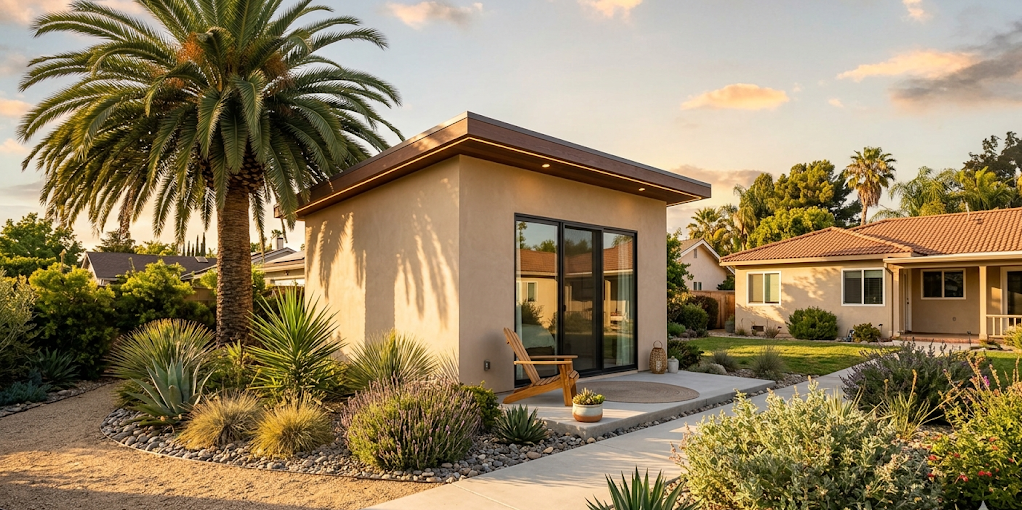
Most Riverside homeowners who look into building an ADU expect the permit conversation to be the hard part. It isn’t.
The part that stalls more projects than anything else is the financing conversation. Not because the money isn’t available, but because nobody has clearly explained what’s actually on the table right now. The ADU financing landscape in California has changed significantly over the past three years, and most homeowners are still working from outdated assumptions: that you need a construction loan, that you need strong savings, or that you need to have the full build cost sitting liquid before anything can move forward.
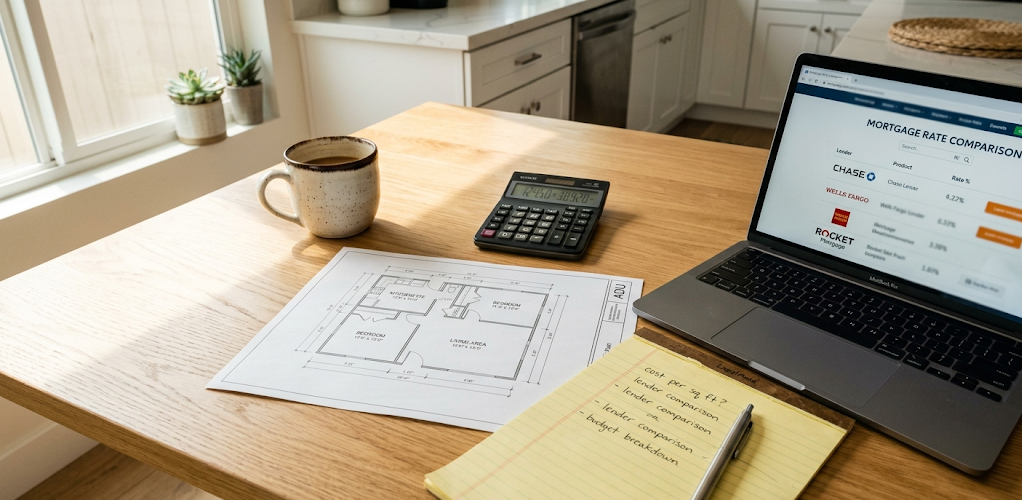
None of that is accurate in 2026. California has one of the most developed ADU financing ecosystems in the country, built specifically to help homeowners in Riverside and the Inland Empire fund builds that generate real returns. One-bedroom ADUs in Riverside County rent for $1,600–$2,100 per month in the current market. At those numbers, a well-financed ADU build doesn’t just pay for itself. It changes your monthly financial picture. The question isn’t whether you can afford to build one. It’s which financing path fits your situation best.
This guide covers every major financing option available to Riverside ADU builders in 2026, what each one actually requires, and how to think through the decision before your first contractor conversation. When you’re ready to talk about the build itself, JJ. Builders offers a free 15-minute discovery call to walk through your property and your options.
Key Takeaways
- The CalHFA ADU Grant Program offers up to $40,000 in pre-development cost assistance to qualifying California homeowners — and those funds don’t need to be repaid
- Home equity financing is the most commonly used path for Riverside homeowners, and current Inland Empire property values make it viable for far more people than realize it
- Construction-to-permanent loans are structured specifically for ADU builds and roll into long-term financing once the unit receives its certificate of occupancy
- California law prohibits lenders from requiring owner-occupancy as a condition of ADU financing, which meaningfully expands your options
The CalHFA ADU Grant: Start Here Before You Do Anything Else
The California Housing Finance Agency’s ADU Grant Program is the first conversation every Riverside homeowner should have before committing to a financing path.
The program provides up to $40,000 in grant funds to cover pre-development and non-recurring closing costs on an ADU build. Pre-development costs include architectural drawings, engineering, permit fees, soil reports, and utility connection fees. These are the soft costs that typically run $15,000–$30,000 on a new detached ADU build in the Inland Empire, and they come due before a single shovel hits dirt.
Grant funds don’t need to be repaid as long as you close on a qualifying ADU loan through a participating lender. That’s not a typo. This is money the state puts toward your pre-development costs in exchange for you following through on the build with a qualifying financing product. It isn’t a deferred loan with compounding interest. It’s a grant.
Income limits apply. The program targets low-to-moderate income homeowners, with limits varying by county and household size. Riverside County income limits are published and updated on the CalHFA website. The program has also gone through funding cycles, so availability shifts. Check with a participating lender on current status before building your plan around it.
And if you don’t qualify on income, the soft cost knowledge alone is worth having. Knowing that pre-development costs run $15,000–$30,000 helps you plan your total budget accurately, regardless of whether a grant offsets them.
Cash-Out Refinance: The Most Direct Path for Equity-Rich Homeowners
If you’ve owned your Riverside home for five or more years, there’s a strong chance you’re carrying meaningful equity. According to the California Association of Realtors, median home values across Riverside County have appreciated significantly since 2019, and many homeowners who bought in that window are sitting on $150,000–$300,000 or more in available equity depending on their original purchase price and current balance.
A cash-out refinance replaces your existing mortgage with a new, larger loan and puts the difference in your hands as cash. You use that cash to fund the ADU build. The unit then generates rental income that offsets a portion of your new monthly payment.
The math is real when the numbers align. Say you carry a $350,000 balance on a home worth $650,000. A cash-out refi to 80 percent loan-to-value frees up $170,000. A quality detached ADU in Riverside runs $130,000–$200,000 all-in including soft costs. You build, rent at $1,800 per month, and that income covers a meaningful share of the payment increase from the larger loan.
The catch is rate sensitivity. If your current mortgage sits well below today’s prevailing rates, a full refinance means giving up that rate on your entire loan balance, not just the ADU portion. For homeowners with rates under 4%, this math often doesn’t pencil. That’s where a HELOC or home equity loan becomes the smarter move.
HELOC and Home Equity Loans: Preserve Your First Mortgage Rate
A home equity line of credit or a fixed home equity loan lets you borrow against your equity without touching the original first mortgage. You keep your current rate on the existing loan balance and take a second lien specifically for the ADU construction amount.
A HELOC functions like a credit line. You draw funds as needed during construction, which aligns well with a project that pays subcontractors and suppliers in stages. Interest accrues only on what you’ve drawn. Many HELOCs convert to a repayment period of 10–20 years once construction closes out.
A home equity loan delivers a lump sum at a fixed rate. More predictable than a HELOC, though less flexible for a phased construction draw schedule.
Both require sufficient equity and qualifying credit. Current HELOC rates in California are running in the 8–10% range in early 2026, which is higher than the low-rate environment of 2020–2021 but still serviceable when rental income is factored into the return. A homeowner whose Rancho Cucamonga ADU rents for $1,900 per month is covering substantial interest cost on a $120,000 HELOC from day one of tenancy.
Start with your current lender. Existing banking relationships often produce better terms, and your lender already has your financial history on file.
Construction-to-Permanent Loans: Built Specifically for This
A construction-to-permanent loan, often called a C2P or single-close construction loan, is designed for homeowners building new structures who don’t want to carry two separate loans through the process.
Here’s how it works. You qualify for one loan covering both the construction phase and the permanent financing. During construction, funds are drawn in stages as work is completed and inspected. Once the ADU receives its certificate of occupancy, the loan converts automatically to a standard mortgage or second mortgage without a second closing.
One appraisal. One set of closing costs. One closing. The qualification happens upfront based on projected post-completion value, which requires a lender experienced in underwriting ADU projects specifically in California.
Not all lenders handle this well. Inland Empire permit timelines and construction draw schedules are different from what lenders in other states are used to. Seek out lenders who have closed C2P loans on California ADU builds recently, not just residential construction broadly.
ADU-Specific Programs Through Regional and Community Lenders
Beyond the CalHFA grant, California has developed ADU-specific lending products through regional banks, credit unions, and community development financial institutions worth knowing about.
Several Inland Empire credit unions offer ADU construction loans with local underwriting, faster approval timelines, and direct familiarity with Riverside County permit processes. These are worth shopping alongside national lenders because local institutions often carry more flexibility on documentation and faster draw approvals during construction.
The California Department of Housing and Community Development maintains a list of ADU financing resources updated periodically. Some programs target specific profiles: older homeowners building aging-in-place units, homeowners in designated opportunity zones, and households with income from self-employment or non-traditional sources that traditional underwriting methods underweight.
Your contractor should have a working knowledge of the financing tools their clients actually use. JJ. Builders works with Inland Empire homeowners through the full ADU process, and that includes pre-construction conversations where financing timing and its effect on scope decisions gets addressed directly.
How Your Financing Choice Affects the Project Timeline
This connection rarely gets discussed, and it should. The path you choose to fund your ADU directly affects when construction can start and how flexible your scope decisions are once the build is underway.
A homeowner drawing from an existing HELOC can fund design and pre-construction immediately, with no lender approval delay. That means design work and permitting can run in parallel, shaving real weeks off the front end of the schedule. A homeowner waiting on a construction loan approval needs to build 30–60 days of lender processing into their timeline before the first dollar can move.
Financing type also shapes change order flexibility during construction. A construction loan has a fixed draw schedule tied to lender-approved disbursements, which means scope changes require lender sign-off in addition to your approval. A HELOC or cash-out refi gives you direct discretion over scope adjustments without an additional approval layer.
And the scale of your build may shift based on what financing you can access. A garage conversion at $55,000–$80,000 all-in is fundable from an existing HELOC for most equity-rich Riverside homeowners. A new detached ADU at $140,000–$200,000 may require a construction loan or cash-out refi simply to preserve monthly cash flow through a longer build timeline.
Settle your financing before you finalize your scope. Not after.
What the Income Side of the Equation Actually Looks Like
Any honest ADU financing conversation has to include the return, because the return is what makes the numbers work.
One-bedroom ADUs in Riverside rent for $1,400–$1,800 per month in current conditions. Two-bedroom units command $1,800–$2,200. A well-executed garage conversion can achieve occupancy within 30 days of its certificate of occupancy. That income is recurring, it’s tied to a physical asset on your property, and it compounds over time as rents adjust to market conditions.
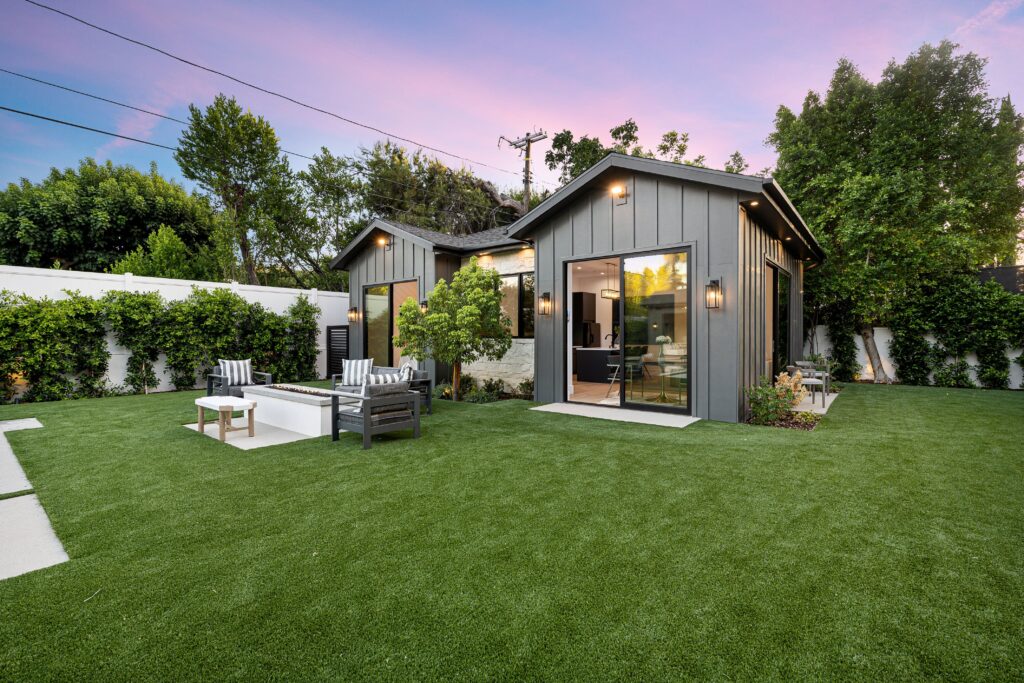
According to NAHB research, ADUs add between 20 and 35 percent of the construction cost to a home’s appraised value in California markets. A $140,000 ADU build in Riverside may add $28,000–$49,000 to your property value on the day it completes, before a single rent payment arrives. The financing cost on that build looks different when both the income stream and the equity gain are factored in together.
The question worth sitting with isn’t just “can I finance this.” It’s “what does my financial position look like three years from now if I build this versus if I don’t.” For most Riverside homeowners with available equity, that comparison is fairly straightforward.
Your Next Step
If you’re ready to get specific about what an ADU would cost on your property and which financing path fits your situation, schedule a free discovery call with JJ. Builders. The conversation covers your lot, your goals, realistic construction costs, and the financing options that make sense for where you are right now. License #1021480. Call (626) 808-1642 or reach out at info@jj.builders.
Frequently Asked Questions
Is the CalHFA ADU Grant still available in 2026?
The CalHFA ADU Grant Program has operated in funding cycles since its launch. Availability depends on current funding status, which changes. Check with a CalHFA participating lender for current program availability and Riverside County income limits before building your plan around this funding source.
Can I use a HELOC to fund an ADU build in Riverside?
Yes, and it’s one of the most commonly used tools among equity-rich Riverside homeowners. A HELOC preserves your first mortgage rate, allows staged draws that match construction progress, and doesn’t require a second closing. Current HELOC rates in California are running 8–10% in early 2026. Rental income from the completed ADU offsets a meaningful share of those carrying costs.
Do I need to live in my home to qualify for ADU financing in California?
California law prohibits lenders from requiring owner-occupancy as a condition of standard ADU financing. You can finance and rent both the primary home and the ADU on the same property. Junior ADUs carry separate owner-occupancy requirements under state law. Confirm terms with your specific lender and loan program before assuming eligibility.
Can projected ADU rental income help me qualify for financing?
Many lenders allow projected rental income to count toward qualifying income, which improves your debt-to-income ratio. Treatment varies by loan type. FHA guidelines allow up to 75 percent of estimated rental income to count toward qualification for properties with an existing or proposed ADU, according to current FHA policy.
About JJ. Builders
JJ. Builders is a licensed general contractor serving Riverside, Rancho Cucamonga, and the Inland Empire, specializing in ADU construction, garage conversions, home remodels, additions, and custom homes. Owner Joshua Phillips brings 18 years of residential construction experience to every project, with a process built around transparent pre-construction planning, written change orders, and communication that keeps homeowners informed from first call to final walkthrough. License #1021480. Call (626) 808-1642 or reach out at info@jj.builders.